
Large format printing is one of the most versatile tools in any business's marketing arsenal. Whether you need a banner for a grand opening, a backdrop for a trade show booth, signage for a retail location, or a vehicle wrap that turns your fleet into mobile billboards, large format printing makes it possible to communicate your message at scale — literally.
This guide covers everything you need to know about large format printing: what it is, what you can make with it, which materials to choose, and how to prepare your files for the best possible results.
What Is Large Format Printing?
Large format printing refers to any print output that is too large for standard commercial presses. While there is no universal cutoff, the industry generally defines large format as anything wider than 18 inches, with most large format printers capable of producing output between 24 and 100 inches wide. Roll-fed printers can produce prints of virtually unlimited length.
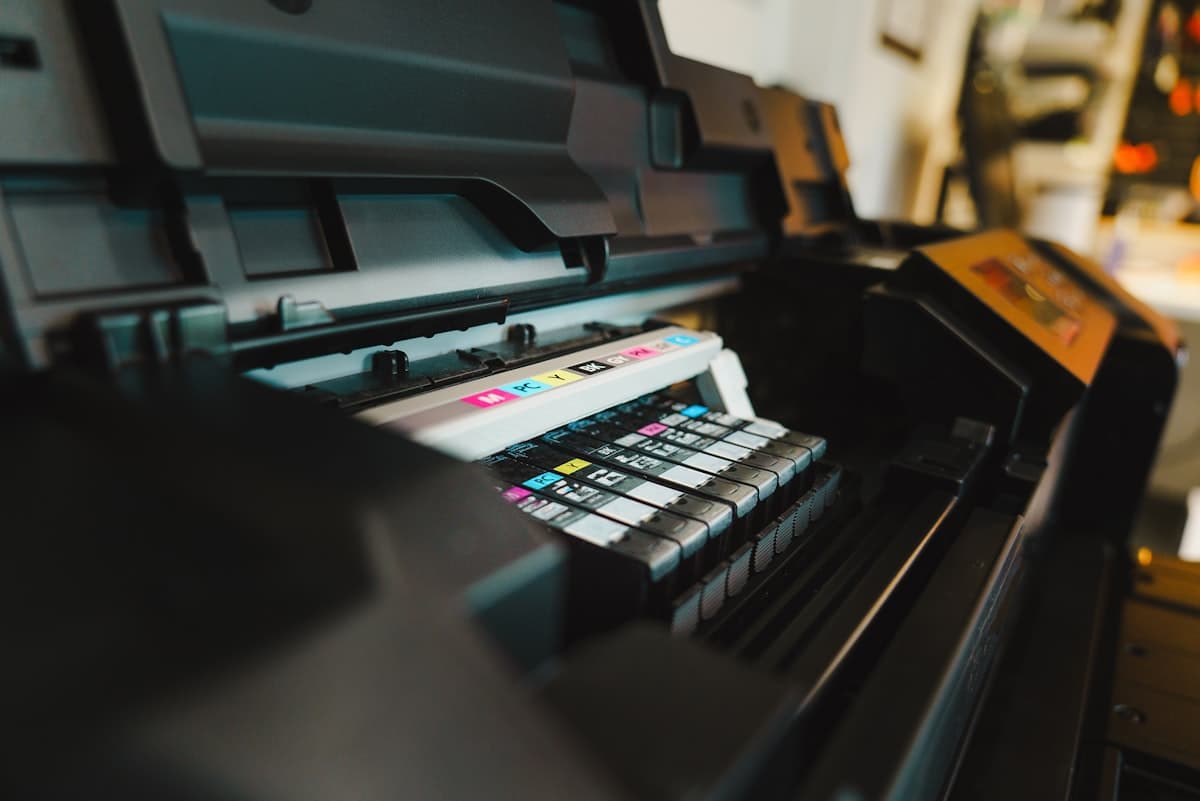
Modern large format printers are wide-carriage inkjet devices that spray tiny droplets of ink onto a substrate as it feeds through the machine. The technology has advanced dramatically in recent years, producing vivid, high-resolution output on an enormous variety of materials — from paper and vinyl to fabric, wood, acrylic, and aluminum.
Grand format printing, a subset of large format, typically refers to output wider than 100 inches and is used for billboard-scale applications.
Common Applications
Large format printing serves an exceptionally wide range of commercial and promotional purposes. Here are the most popular applications.
Banners
Vinyl banners are one of the most requested large format products. They are affordable, durable, and effective for both indoor and outdoor use. Common applications include grand openings, sales events, construction site branding, and seasonal promotions. Standard sizes range from 3' x 6' to 4' x 8', though custom dimensions are available.
Retractable Banner Stands
Retractable (or roll-up) banner stands are a staple at trade shows, conferences, and in-store displays. The printed graphic rolls up into a lightweight base, making them extremely portable. A standard retractable banner is 33" x 81", though wider and shorter options exist. These displays can be set up by one person in under a minute.
Posters
Large format posters are used for event promotion, wayfinding, menu boards, educational displays, and interior decor. They can be printed on paper, photo paper, adhesive vinyl, or rigid substrates like foam board and Gatorboard.
Yard Signs and Corrugated Plastic Signs
Corrugated plastic (commonly known by the brand name Coroplast) is the standard material for yard signs, real estate signs, political campaign signs, and directional signage. It is lightweight, weatherproof, and inexpensive. Standard sizes are 18" x 24" and 24" x 36", and they are typically displayed using wire H-stakes.
Vehicle Wraps
A full or partial vehicle wrap transforms a car, van, truck, or trailer into a moving advertisement. Vehicle wraps are printed on specialty adhesive vinyl with an air-release backing that allows for bubble-free application. A well-designed vehicle wrap can generate tens of thousands of visual impressions per day, making it one of the most cost-effective forms of advertising over time.
Wall Murals and Graphics
Printed wall graphics can transform a lobby, office, restaurant, or retail space. Options range from removable adhesive vinyl (ideal for temporary promotions or leased spaces) to permanent wallpaper-style prints. Wall murals are increasingly popular for creating branded environments and Instagram-worthy spaces.
Window Graphics
Window graphics serve dual purposes: advertising and privacy. Perforated window vinyl (also called one-way vision film) allows you to display a full-color graphic on the outside of a window while maintaining visibility from the inside. Solid vinyl, frosted film, and clear cling materials are also available for various window applications.
Trade Show Displays
Beyond retractable banners, the trade show category includes fabric backdrops, pop-up displays, table throws, hanging signs, floor graphics, and modular exhibit systems. Fabric printing using dye-sublimation technology has become especially popular for trade shows because the prints are lightweight, wrinkle-resistant, and machine washable.
Materials: Choosing the Right Substrate
The material you print on has a major impact on durability, appearance, weight, and cost. Here is an overview of the most common large format substrates.
Vinyl (PVC)
Vinyl is the most widely used large format material. It is available in adhesive-backed, banner-grade, and specialty formulations. Outdoor vinyl is engineered to resist UV fading, moisture, and temperature changes. Typical lifespan for outdoor vinyl graphics is 3 to 5 years, depending on conditions and lamination.
Fabric and Textile
Fabric printing, typically done through dye-sublimation, produces vibrant, soft-to-the-touch graphics with no visible glare. Fabric is the material of choice for trade show backdrops, hanging signs, and table covers. It is lightweight, foldable, and can be shipped inexpensively.
Foam Board and Gatorboard
Foam board (also called foam core) is a lightweight rigid substrate made of polystyrene foam sandwiched between paper or plastic facings. It is commonly used for indoor signs, presentation boards, and point-of-purchase displays. Gatorboard is a more durable, moisture-resistant alternative with a wood-fiber facing.
Corrugated Plastic (Coroplast)
As mentioned above, Coroplast is a fluted plastic sheet material. It is waterproof, lightweight, and affordable, making it the go-to choice for temporary outdoor signage. It does not have the premium appearance of other materials, so it is best suited for functional rather than high-end applications.
Acrylic and Plexiglass
Acrylic panels provide a sleek, modern look for interior signage, lobby displays, and architectural graphics. Printing can be done directly on the acrylic surface or applied as a vinyl graphic behind a clear acrylic panel. Acrylic signs communicate quality and permanence.
Aluminum and Dibond
Aluminum composite panels (sold under brand names like Dibond) consist of two thin aluminum sheets bonded to a polyethylene core. They are rigid, weather-resistant, and extremely durable — ideal for permanent outdoor signage, building-mounted signs, and wayfinding systems. Direct-to-substrate printing or applied vinyl are both common methods.
Indoor vs Outdoor: What to Consider
Choosing between indoor-rated and outdoor-rated materials and inks is essential. Using indoor materials outdoors will result in rapid fading, curling, and deterioration.
Outdoor Requirements
- UV-resistant inks. Solvent-based, eco-solvent, latex, and UV-curable inks all offer varying levels of outdoor durability. Ask your printer which ink system they use.
- Weatherproof substrates. Vinyl, aluminum, Coroplast, and treated fabrics can withstand rain, wind, and sun.
- Lamination. Adding a clear laminate over the printed surface extends the lifespan of outdoor graphics by 1 to 3 additional years and protects against scratching and fading.
Indoor Applications
Indoor graphics can use a wider range of materials since they are not exposed to weather. Paper, foam board, unlaminated vinyl, and fabric are all excellent indoor choices. Indoor prints typically cost less because they do not require UV inks or lamination.
Design Tips for Large Format Printing
Designing for large format is different from designing for a business card or brochure. Here are practical guidelines to ensure your project looks great.
Keep It Simple
Large format graphics are often viewed from a distance — 10 feet, 50 feet, or even further for vehicle wraps and building signs. Use large, bold typography. Limit your message to a few key words or a single call to action. Avoid cluttering the design with excessive text or small details.
Use High-Contrast Colors
Bold color combinations ensure readability at a distance. Dark text on a light background or light text on a dark background works best. Avoid low-contrast pairings like yellow text on a white background.
Choose Readable Fonts
Sans-serif fonts (such as Helvetica, Futura, or Montserrat) tend to be more legible at large sizes and long viewing distances. Avoid thin, decorative, or script fonts for primary headlines on banners and signs.
Include a Clear Call to Action
Every large format piece should tell the viewer what to do next: visit a website, call a phone number, stop into your store. Make the CTA prominent and easy to remember.
Resolution Requirements for Large Format
One of the most common questions we receive is about image resolution for large prints. The answer is different from standard commercial printing.
While business cards and brochures require 300 DPI at print size, large format prints are viewed from a greater distance. As a result, lower resolutions are acceptable:
- Posters and displays viewed from 3-5 feet: 150-200 DPI at print size
- Banners and signs viewed from 6-15 feet: 100-150 DPI at print size
- Building wraps and billboards viewed from 25+ feet: 25-72 DPI at print size
That said, always provide the highest resolution source files you have. Your printer can downsample if needed, but they cannot add detail to a low-resolution image.
File Setup for Large Format
- Work in CMYK color mode. Just like standard print, large format files should be CMYK.
- Set up your document at full size when possible. For very large outputs (over 60"), you may set up your file at half size (50%) and note the scale on the file.
- Include 1 to 2 inches of bleed on all sides, especially for items that will be trimmed or mounted.
- Export as high-resolution PDF, TIFF, or EPS. PDF is preferred. Avoid JPEG compression when possible.
- Outline all fonts to prevent substitution issues.
Finishing Options
The way your large format print is finished determines how it will be displayed and how long it will last.
- Grommets. Metal eyelets placed along the edges of a banner for hanging with rope, bungee cords, or zip ties. Standard spacing is every 2 to 3 feet.
- Pole pockets. Fabric or vinyl sleeves sewn or heat-welded along the top and bottom edges of a banner to accept a dowel or pole. This creates a clean, hardware-free appearance.
- Hemming. Folding and welding the edges of a vinyl banner to reinforce them and prevent fraying.
- Lamination. A clear protective film applied over the printed surface. Matte lamination reduces glare; gloss lamination intensifies colors. Both extend the life of the print.
- Mounting. Adhering a print to a rigid substrate (foam board, Gatorboard, PVC, aluminum) for structural support. This is common for indoor signs and display boards.
- Contour cutting. Cutting the print to a custom shape rather than a standard rectangle. Used for floor graphics, custom-shaped signs, and decals.
Get Started With Large Format Printing
At Elevation Printing Services in South Plainfield, NJ, we produce large format graphics for businesses across central New Jersey and beyond. From a single retractable banner for your next trade show to a full vehicle wrap for your company fleet, we handle every step of the process — design consultation, file preparation, printing, finishing, and even installation for select products.
Our large format capabilities include vinyl banners, retractable displays, posters, yard signs, wall murals, window graphics, vehicle wraps, trade show displays, and custom signage on rigid substrates.
Contact us today for a free quote or stop by our South Plainfield facility to see material samples and discuss your project in person. We are ready to help you make a big impression.